LEND ― Life Empowerment for Neural Diversity
Build your own appsto supportneural diversity
LEND helps neurodivergent people in Japan, along with their parents, families, and supporters, use AI to create apps and systems tailored to how each person sees, hears, communicates, and learns. No engineering background required.
LEND Project Showcase
Apps we are actually building at LEND. The articles walk through how each one is made.
 Details
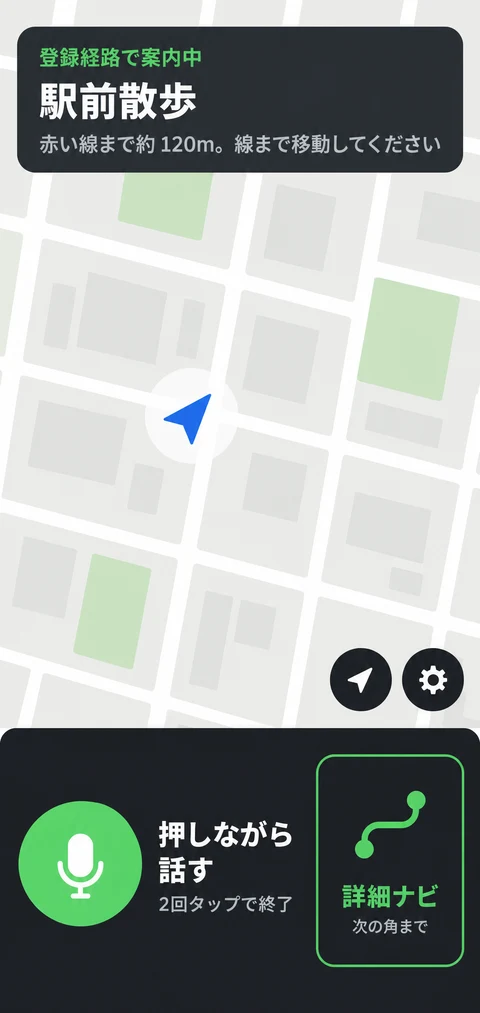 Aroundly Voice Walking NaviiPhone / AndroidDoor-to-door routes that mix walking and public transit, guided entirely by voice. Record your usual commute and Aroundly suggests detours based on it, so you know what to do with a few simple actions when something unexpected happens.Coming SoonDetails
Latest articles
View all articlesGentle, practical first steps to make AI your ally.
 Support for SeeingBuilding an iPhone App from a Full Prompt with ChatGPTRead →iPhone App Development - TV Scene Narrator③
 Support for SeeingThe Prompt That Gets AI to Build an iPhone App for YouRead →iPhone App Development - TV Scene Narrator②
 Support for SeeingWhy Does Building Your Own iPhone App Cost So Much?Read →
What we cover
Five categories of app-building and AI know-how, tailored to how each person sees, hears, communicates, and learns.
01 ・ Support for Seeing
Building apps for the way you see
Real examples of apps made for people with visual impairments or difficulties — tuning contrast and layouts, putting read-aloud to work, and shaping each screen around the way each person actually sees.
Browse this category →
Latest: Building an iPhone App from a Full Prompt with ChatGPT
02 ・ Support for Listening
Making sound visible
App development for people with hearing difficulties: turning sound into text or light, signalling changes in the sounds nearby, and gently supporting everyday listening.
Browse this category →
Articles coming soon
03 ・ Support for Communicating
Giving shape to “I want to tell you”
Apps that support people who find speaking hard. From picture cards to speech output (AAC), we show how to build communication tools tailored to each person, together with AI.
Browse this category →
Articles coming soon
04 ・ Support for Reading & Writing
Lowering the hurdles of reading and writing
Apps for people with dyslexia, dysgraphia, and other reading and writing difficulties — reading materials aloud and easing the load of writing to widen the doorway into learning.
Browse this category →
Articles coming soon
05 ・ Support for AI Skills
Keeping your AI skills up to date
The latest on putting AI to work: how to use new tools, configuration tips, and the essentials of using AI safely — everything parents and supporters should know first, in plain language.
Browse this category →
Articles coming soon
About One Code Club
The closest handsbecome the greatest strength

There are countless ideas for apps and systems that could make daily life a little easier for people with neurodivergent traits. Building an app tailored to one person's needs, for that one person, used to seem unrealistic. Today, with AI, even people who are not engineers can build them.
I myself live with a visual impairment. There are things I cannot do, and things I have had to give up. Even so, with the help of AI, I have been able to keep developing software. And whenever I think "something like this would help," I can build an app to supplement my sight in a short time. Experience after experience like this has, in fact, made my own life a little easier.
I don't believe this is only my story. We are entering an era in which the everyday troubles people once wrote off as "just the way it is" can be solved by that person themselves, or by someone who supports them. Building with AI is never easy, but even so, why not create, with our own hands, the moment a struggling child or adult's "I couldn't" turns into "I did"?
Background
Began a career as an economics reporter at a Tokyo newspaper, then moved to the United States in 1996 and into the IT industry, working as a localization engineer on numerous projects that brought software to many languages. Joined Microsoft in the US in 2005, first developing terminology systems and later serving as a project manager on the speech technology team in the Azure AI Platform division, responsible for data, privacy, and security management. A director of Kids Code Club since 2022, building the systems that support children's digital creative learning. Books include 1-Minute Programming You Can Write Right Now (KADOKAWA) and 30 English Verbs Every IT Engineer Should Know (Shuwa System).