Support for Seeing · 3 articles
Building apps for the way you see
Real examples of apps made for people with visual impairments or difficulties — tuning contrast and layouts, putting read-aloud to work, and shaping each screen around the way each person actually sees.
The Prompt That Gets AI to Build an iPhone App for You
"I'm not an engineer — how am I supposed to build an app?" If this project caught your interest, chances are that question crossed your mind. Here's the short answer: once you clear the very first hurdle, the rest is simply "telling the AI what you want." In this article, I want to help you take that first step. Once you get past it, you'll be able to shape apps to your own liking as much as you want — so hang in there and follow along!
Read →
Why Does Building Your Own iPhone App Cost So Much?
Let's start by looking at what you actually need in order to build your own iPhone app. Most of you reading this probably already own an iPhone. But when you're making a smartphone app to support someone with a disability, you may want to set up a "dedicated device" — and in that case, buying a used Android phone and installing the app on it is another realistic option. So let's take a look at how developing and using your own smartphone app differs between iPhone and Android.
Read →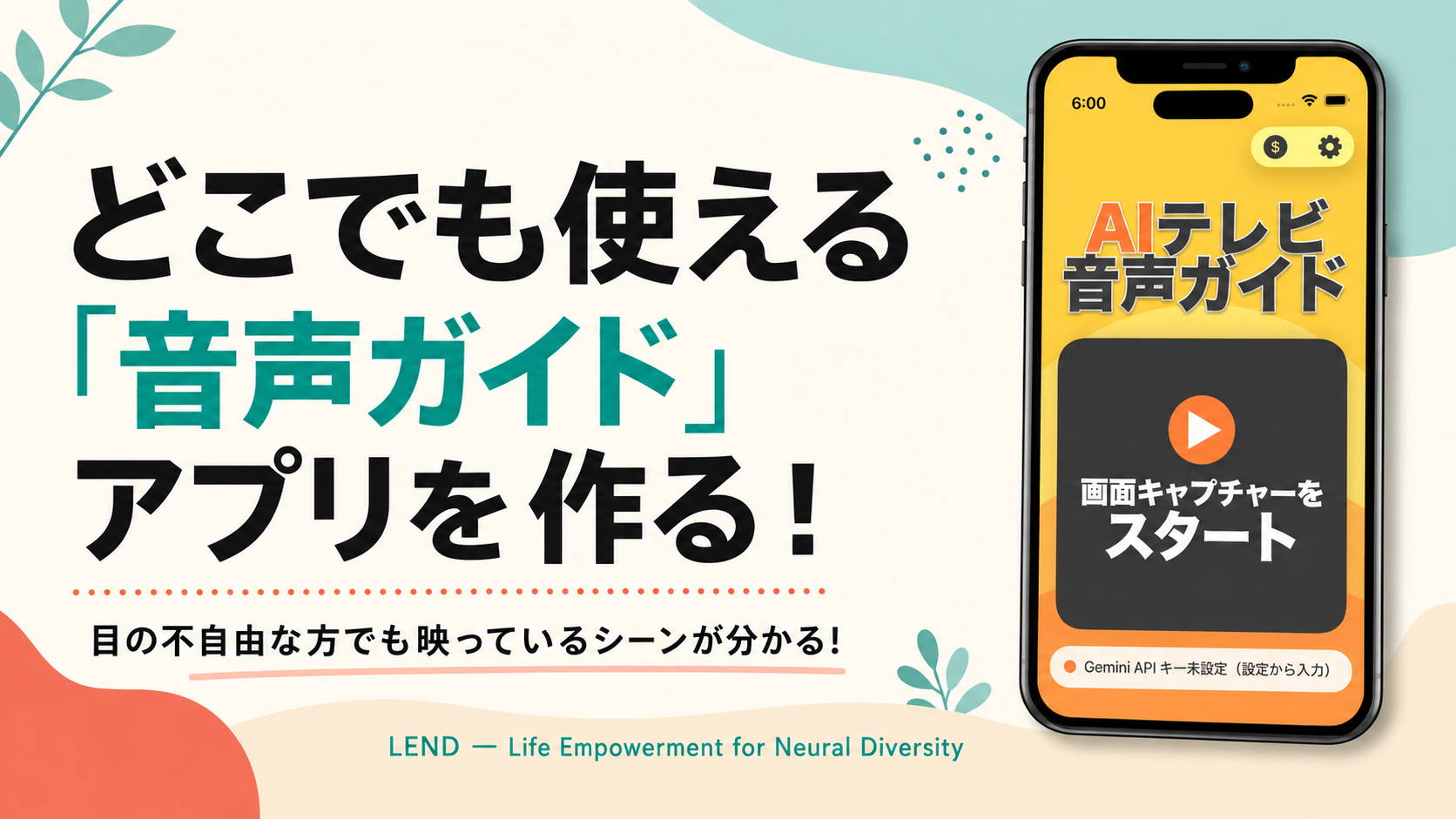
Describing On-Screen Scenes for People Who Are Blind — Building an AI-Powered "TV Audio Guide"
When someone who is blind or has low vision watches TV or a video, the hardest part is not knowing what's happening on screen. Is it day or night? Is it a crowded room, or just a couple of people talking? Dramas are full of things that dialogue alone doesn't convey. To ease that frustration, we're going to build an iPhone app that has AI describe the scenes for you. Even if you've never built an app before, we'll walk through each step carefully.
Read →